














3D Business Simulation Workshop
Experiencing the Market Across Time:
From Historical Battles to Modern Challenges
Program Overview
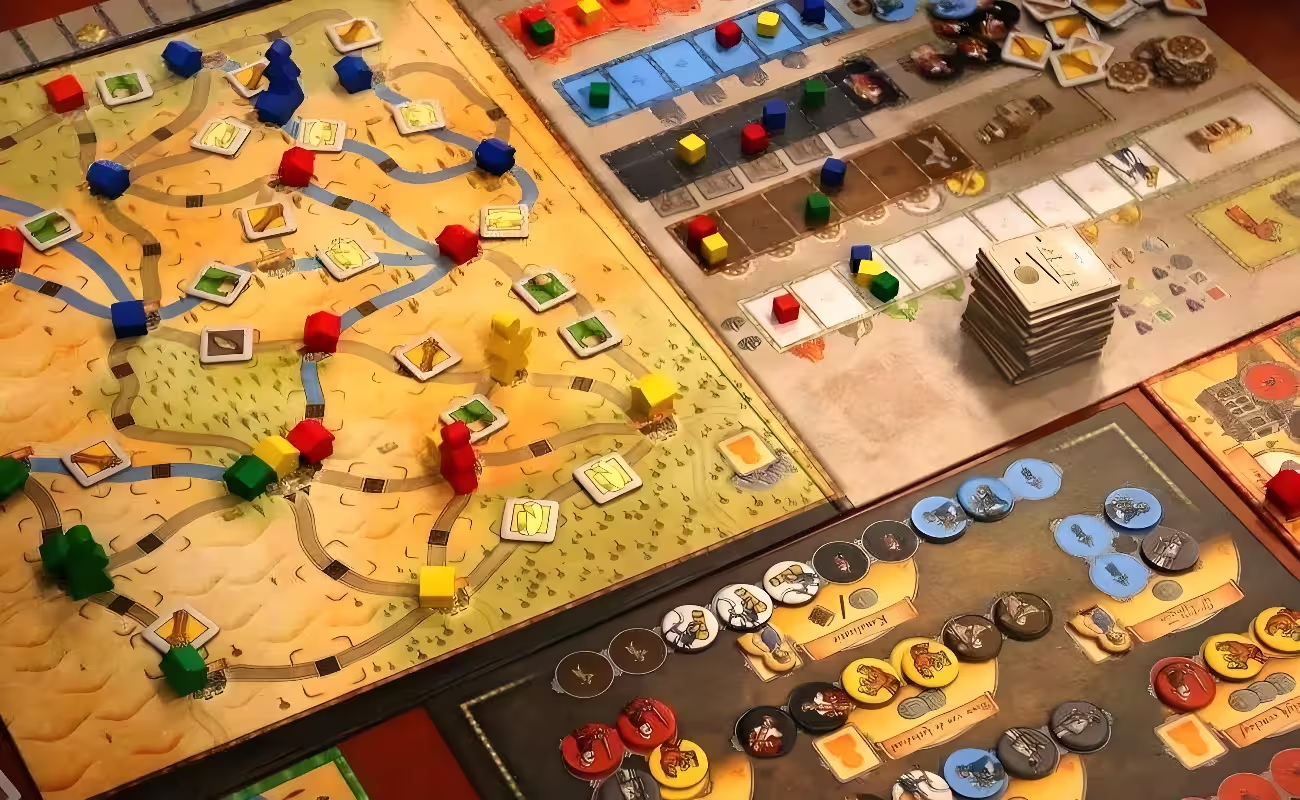
3D Business Simulation is not a simple game but a highly condensed “business pressure chamber”. Participants navigate immersive scenarios designed to diagnose and train teams and individuals on strategic alignment, collaboration efficiency, and leadership development.
The simulation exposes strategic blind spots, highlights coordination gaps, and transforms decision-making from intuition-based to data-driven, helping participants develop critical thinking and actionable strategies in dynamic market environments.



Core Application Scenarios
Scenario 1: Mid-to-senior management — bridging “strategy decoding and execution gaps”
Typical Challenges:
- Strategic consensus exists only at senior levels; middle management lacks understanding, causing misalignment and distorted execution
- Execution outcomes deviate significantly from strategic intent
Simulation Approach:
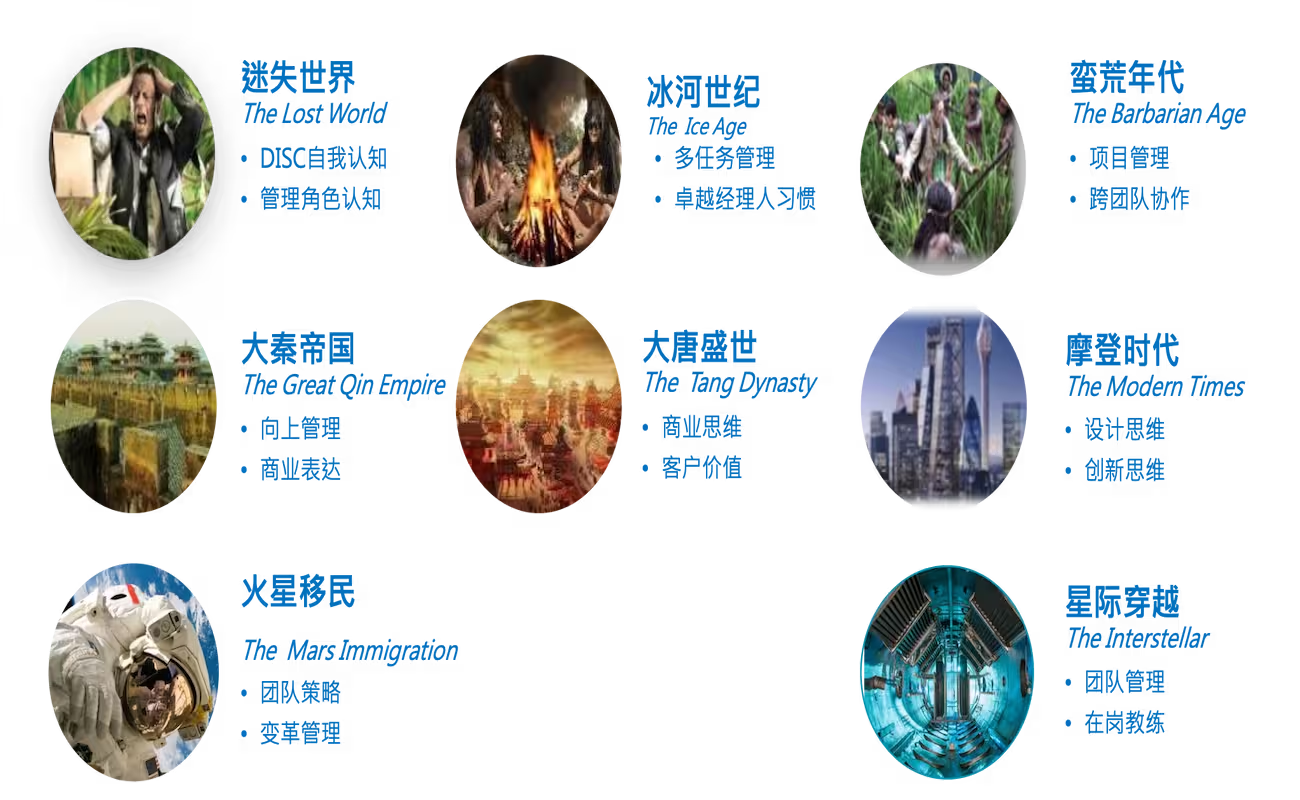
- Tang Dynasty Prosperity: teams act as regional governors, formulating prosperity strategies in an open market. This mirrors how companies balance short-term profits with long-term ecosystem planning, aligning all managers on the organization’s strategic map
- Mars Rescue: extreme scarcity and uncertainty force prioritization decisions, cultivating strategic resilience and shared responsibility in a VUCA environment
Scenario 2: Cross-department project teams — overcoming “departmental silos & collaboration friction”
Typical Challenges:
- Divergent departmental goals and communication systems increase costs, delay projects, and reduce quality
Simulation Approach:
- King of the Desert: teams complete expedition objectives with scarce resources, simulating dependence on resource sharing, transparency, and trust
- Simulation rules enforce cross-team negotiation and trade, shifting mindset from “us vs them” to “how we win together”
Scenario 3: Emerging managers & high-potential talent — managing role transition challenges
Typical Challenges:
- New managers struggle with delegation, lack overall perspective, and underutilize team potential
Simulation Approach:
- Qin Empire: participants act as prefects balancing central directives and local economic development, practicing upward management, reporting, and resource acquisition
- Rotating team leader roles enable hands-on practice of leadership, talent deployment, task allocation, and motivation, transforming thinking from managing tasks to managing people and outcomes
Scenario 4: Core business teams (sales, marketing, product) — addressing “innovation bottlenecks & slow market response”
Typical Challenges:
- Teams rely on existing successful models, lack innovation, and cannot respond effectively to market disruption
Simulation Approach:
- Introducing market event cards and competitor strategies to simulate dynamic market conditions
- Time-travel across historical and futuristic settings encourages participants to break habitual thinking and explore new business opportunities
Key Program Benefits
Enhance strategic thinking & business decision-making and practice solving complex problems and making critical decisions in historical and futuristic scenarios