
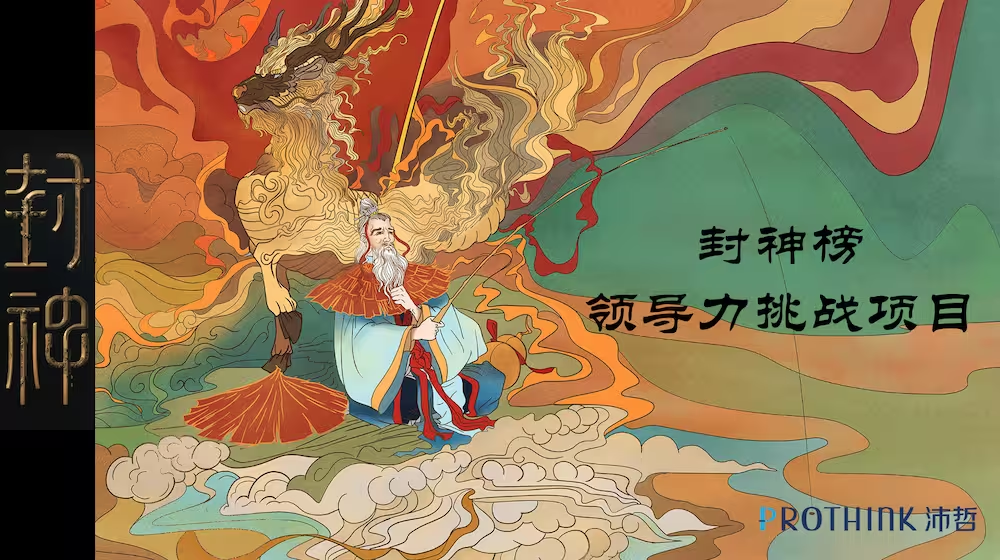












TLC × The Investiture of the Gods (Fengshen Bang)
An Innovative Combination of Cultural IP and Leadership Theory
Program Positioning
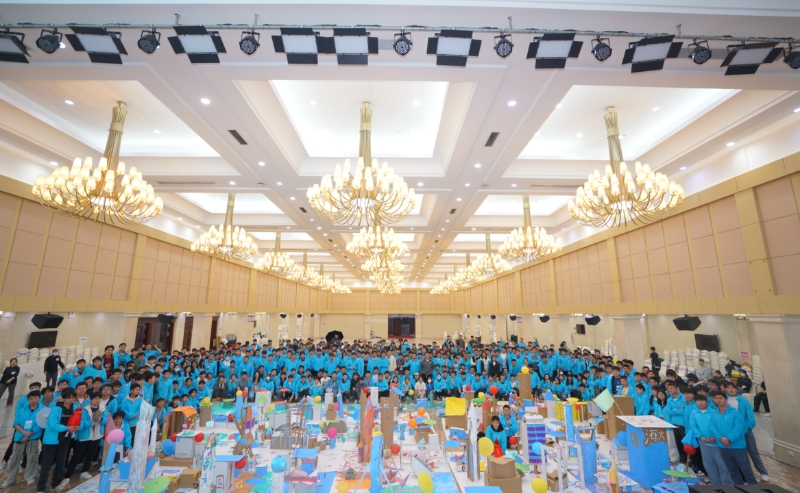
A cross-disciplinary immersive leadership program that integrates a Western leadership framework with the Eastern cultural IP of The Investiture of the Gods.
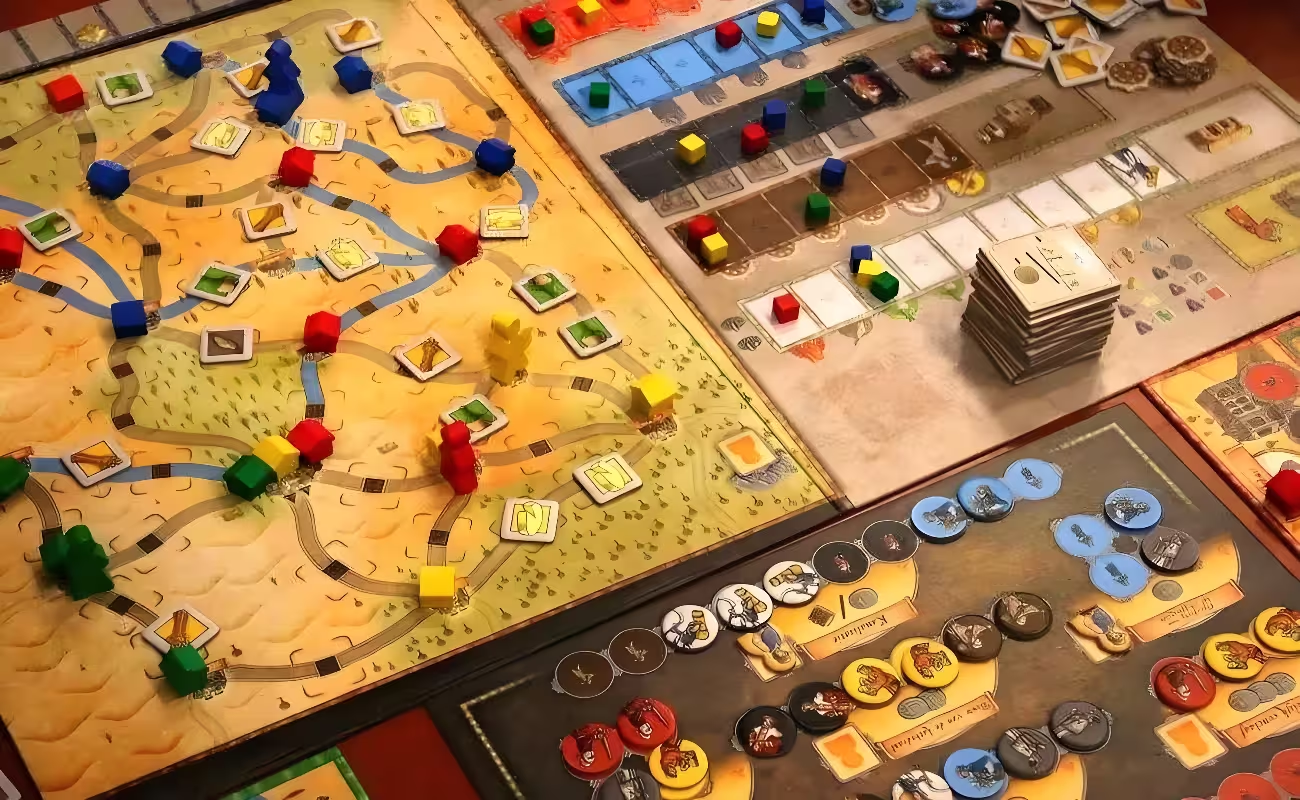
This program embeds the leadership behaviors from a globally recognized leadership model into the classic mythological scenarios of The Investiture of the Gods, allowing participants to practise leadership through immersive, story-based experiences.
By drawing wisdom from the Fengshen universe, participants embark on their own leadership cultivation journey. Guided by the Five Practices of Exemplary Leadership, they continuously practise, reflect, and refine their leadership behaviors within the context of the Fengshen story world.
Classic Scenarios & Leadership Metaphors
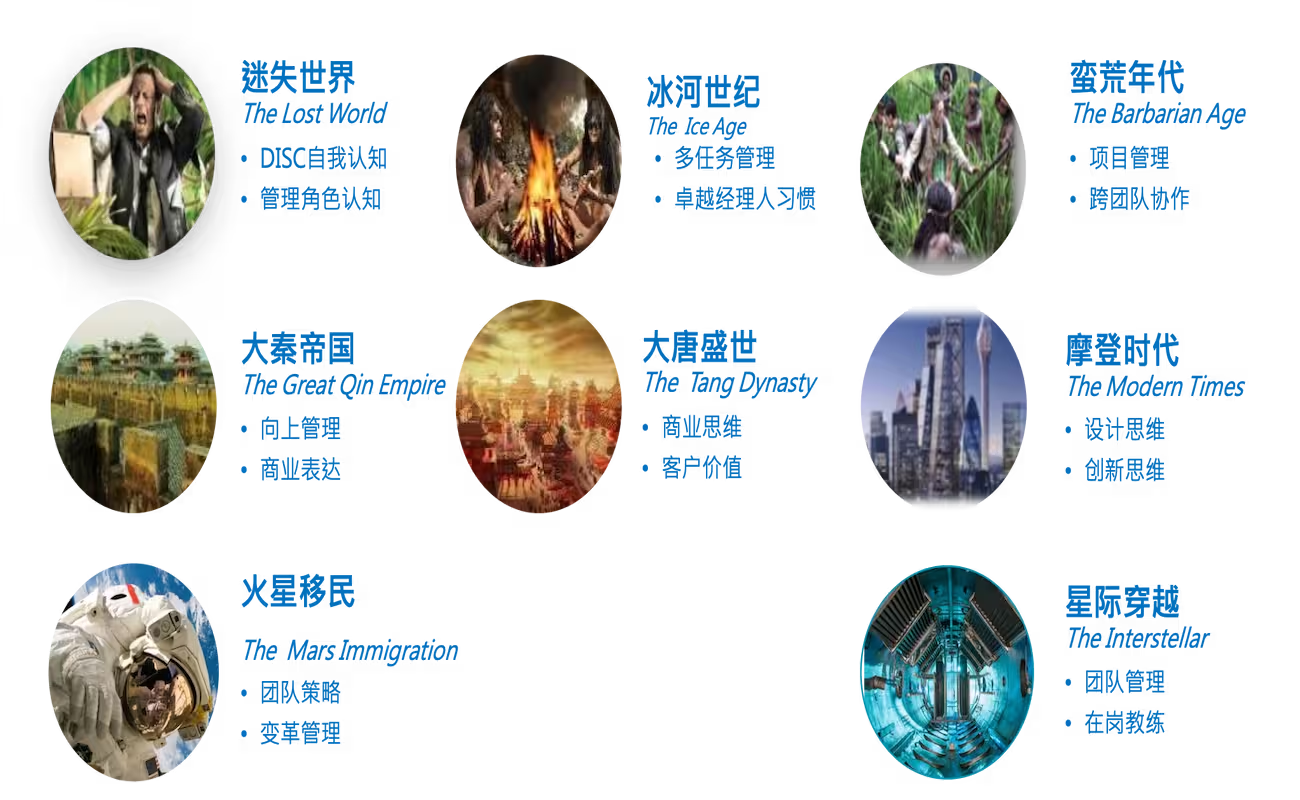
Each scenario corresponds to a specific leadership behaviour and is experienced through role-based missions and challenges
How does Jiang Ziya Lead by Example to unite independent and sceptical allies?
Why does Daji’s attempt to Challenge the Process ultimately fail?
How does Nezha Enable Others to Act and drive true team transformation?
Core Application Scenarios
Who this program is designed for — and what problems it solves
Middle Management Role Transition (New managers / high-potential talent development)
• Role misalignment when moving from top individual contributor to people leader: managers rely on hands-on execution and struggle to build authority through Leading by Example
• Weak team cohesion after promotion or lateral transfer: difficulty in Inspiring a Shared Vision, resulting in passive execution
• Rigid management approaches: attempts to Drive Change trigger resistance, due to lack of skills in Enabling Others rather than controlling them
Cross-Team Collaboration & Complex Projects (New business initiatives / cross-functional programs)
• Strong functional silos: optimisation efforts or process challenges are perceived as “criticism” rather than Challenging the Process constructively
• Low team momentum during project setbacks: Encouraging the Heart remains superficial, lacking sustainable motivation mechanisms
• High resistance to change: new methods are questioned by experienced staff, and leaders struggle to Enable Others to Act at scale
Corporate Culture Across Generations (Connecting traditional values with younger talent)
• Culture communication becomes symbolic: values are displayed but not internalised by employees
• Younger teams resist traditional, lecture-based leadership training and perceive it as irrelevant
• Misalignment between values and behaviour: organizations advocate accountability but punish experimentation, leading to inconsistency between words and actions

Program Value & Impact
From experience to measurable business outcomes
Individual Level — From “Knowing” to “Doing”
• Observable behaviour change: Through role-task reflection tools, over 85% of participants can clearly describe how they apply specific leadership behaviors at work
• Deeper cognitive retention: Compared with lecture-based training, role-task completion rates increase by 60%, and retention of the Five Practices rises from 30% to 75% one month post-program
Team Level — From Fragmentation to Alignment
• Improved cross-team collaboration: In a pilot program within a technology company, cross-functional communication costs decreased by 40%, and project delivery cycles shortened by 25%
• Stronger team cohesion: Post-program surveys show 78% of participants report greater understanding of colleagues’ perspectives
Organizational Level — Culture & Performance in Action
• Culture embedded in management practice: In a traditional manufacturing enterprise, cultural alignment increased from 62% to 91%, and probation-period retention improved by 18%
• Leadership pipeline development: The “Fengshen Path” assessment (role performance + post-program action plans) became a key reference in promotion decisions, increasing new manager performance success rates from 55% to 82% within six months.